

Instagram Trial Reels: How to Test Content With Non-Followers Before Your Audience Sees It

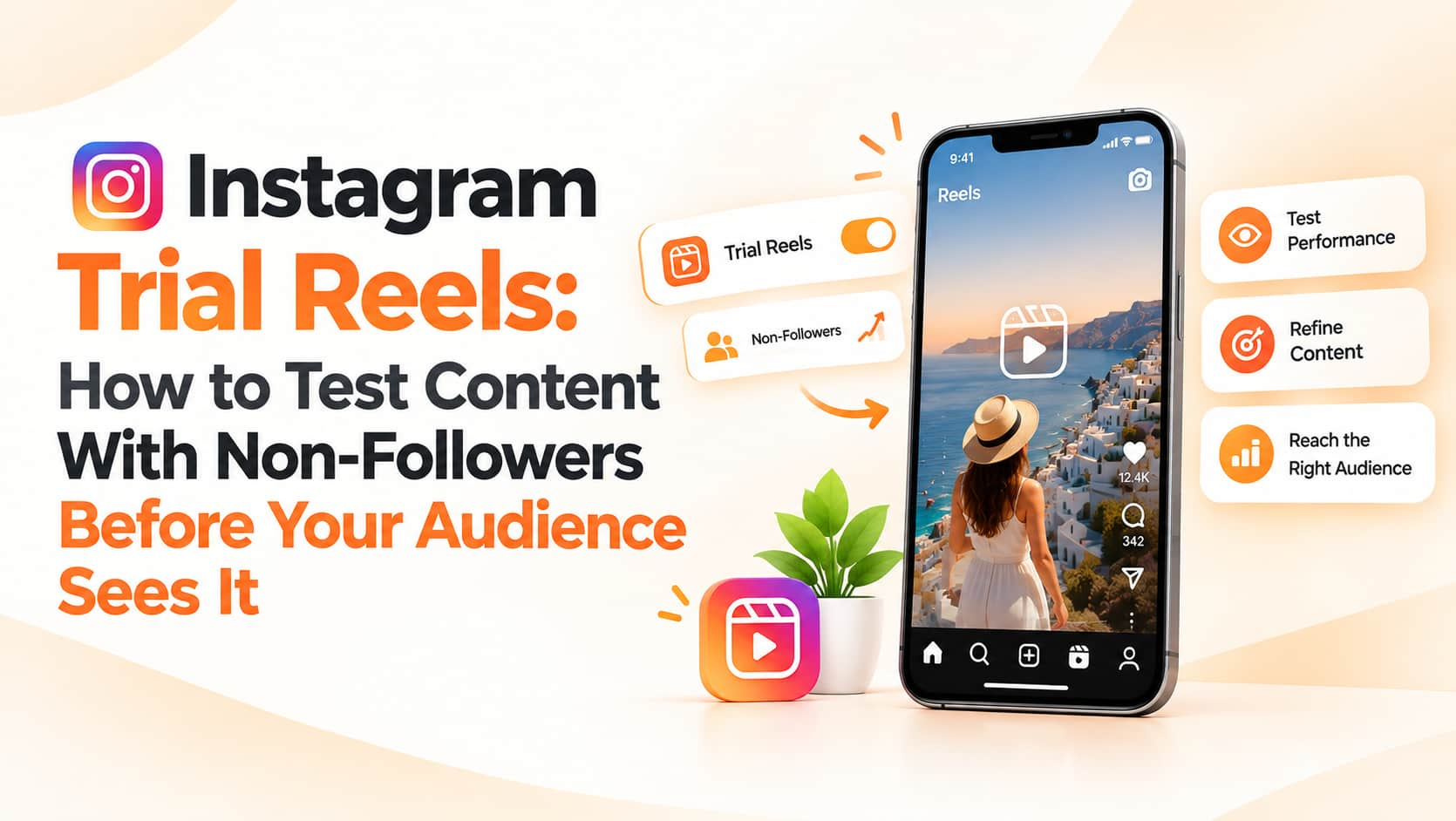
Every brand on Instagram faces the same dilemma. You want to try something new, perhaps a humorous skit, a Hinglish voice-over, a behind-the-scenes look at your kitchen or a founder speaking straight to camera, but you worry that a flop will sit on your profile in front of loyal followers and quietly drag down your account. So most brands play it safe and keep posting the same kind of content, even when it has stopped working.
Trial Reels were designed to solve exactly that problem. They give professional accounts a way to test ideas with new audiences before committing them to their main profile.
What Trial Reels are and how they work
Trial Reels are a feature for professional accounts, meaning Business and Creator profiles, that lets you share a Reel with non-followers first. During the trial, the Reel does not appear to your existing followers and does not show on your profile grid. Instagram shows it to people who do not already follow you, and after a set period you can see how it performed with that fresh audience.
Once the trial ends, you can choose to share the Reel with your followers as well, and depending on your settings, Instagram can do this automatically when a trial performs well. If the Reel underperforms, it simply never reaches your followers, so there is no visible failure on your profile. Instagram updates its features frequently, so check the options available in your app when you create a Reel.
Why this matters for businesses
The biggest value is honest feedback. Your followers already like you, so their reactions are coloured by loyalty. Non-followers have no such bias. If a Reel holds their attention and gets shared, it is a strong sign that the content can attract new customers, not just entertain existing ones.
Trial Reels also make experimentation safe. A boutique can test whether styling videos or price-reveal videos work better without cluttering its grid. A coaching institute can see whether student success stories outperform exam tips. Over time, this protects the quality of your profile while letting you learn faster.
There is a financial benefit too. Producing polished video is expensive, so it makes sense to test rough versions of ideas first and invest production budget only in the ones that work. And a Reel that performs well organically with strangers is an excellent candidate for paid promotion, because Meta's ad systems increasingly reward creative that genuinely engages people.
What to test
The opening few seconds matter more than anything else on Reels, so hooks are the most useful thing to test. Post two versions of the same content with different opening lines, for example "Three mistakes in your GST invoice" against "Your CA will not tell you this", and see which keeps people watching. Language is another powerful variable in India. The same message in English, Hindi, Hinglish or a regional language can perform very differently depending on your audience.
You can also test formats: a talking-head video against text on screen, a product demonstration against a customer story, or a polished edit against a raw phone recording. Length is worth testing too, since a tight fifteen-second version sometimes beats a forty-five-second one and sometimes loses to it. For retailers, offer framing is a valuable experiment; "flat ₹500 off", "free delivery" and "buy two, get one" can attract very different responses.
How to read the results
Views alone can mislead, because a Reel can get many views from people who scroll away after a second. Watch time and completion rate show whether people actually stayed. Shares and saves are strong signs that the content had real value. Profile visits and new follows tell you whether the Reel attracted people to your brand rather than just entertaining them for a moment, and comments reveal questions and objections you can address in future content.
Test one change at a time where possible, and avoid over-reading a single result. Patterns that repeat across several trials are far more reliable than one surprising success.
A simple weekly routine
Each week, pick two or three ideas you are genuinely unsure about and create quick, low-cost versions. Post them as Trial Reels, review performance when the trial ends, and share the winners with your followers, perhaps boosting the strongest. Keep a shared document of what you learn about hooks, length, language and formats. After a couple of months, that document becomes one of your most valuable marketing assets.
Mistakes to avoid
Do not use Trial Reels for everything; your followers still need regular content to stay engaged. Avoid changing several things at once, or you will not know what made the difference. And remember captions and keywords: public posts from professional accounts can also be found in search, so a well-written caption helps every Reel.
Frequently asked questions
Who can use Trial Reels?
They are designed for professional accounts. If you cannot see the option, check your account type and update the app.
Do Trial Reels hurt my reach?
They are built to reach new people. A trial that underperforms is simply not shown to followers.
Can I promote a successful trial?
Many brands share a winning trial with followers and then promote it. Check current promotion options in the app.
Build a Reels strategy based on data
OM Enterprises plans, produces and tests Reels for Indian brands, using trials to find winning hooks before scaling them with ads. Talk to our social media team.